My Role
I contributed to extending continuous transition control from kinematic trajectories to stance-phase impedance behavior for powered knee-ankle prostheses.
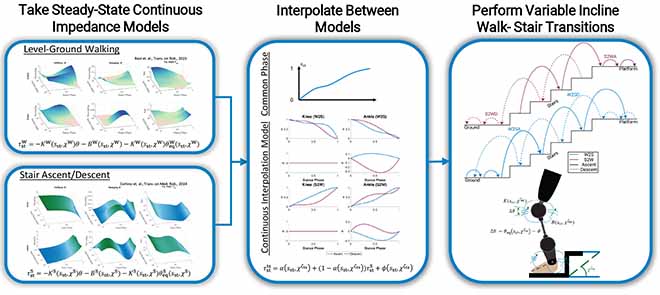
A phase-variable impedance controller that continuously blends walking and stair behavior during stance, extending smooth transition control from prosthesis motion to prosthesis support. Plainly: this focuses on how stiff or supportive the prosthesis should feel while the user is loading it during a transition.
Smooth swing motion isn't enough — during stance the robot must also provide the right support, so this extends continuous transition control into impedance behavior during weight-bearing.
I contributed to extending continuous transition control from kinematic trajectories to stance-phase impedance behavior for powered knee-ankle prostheses.
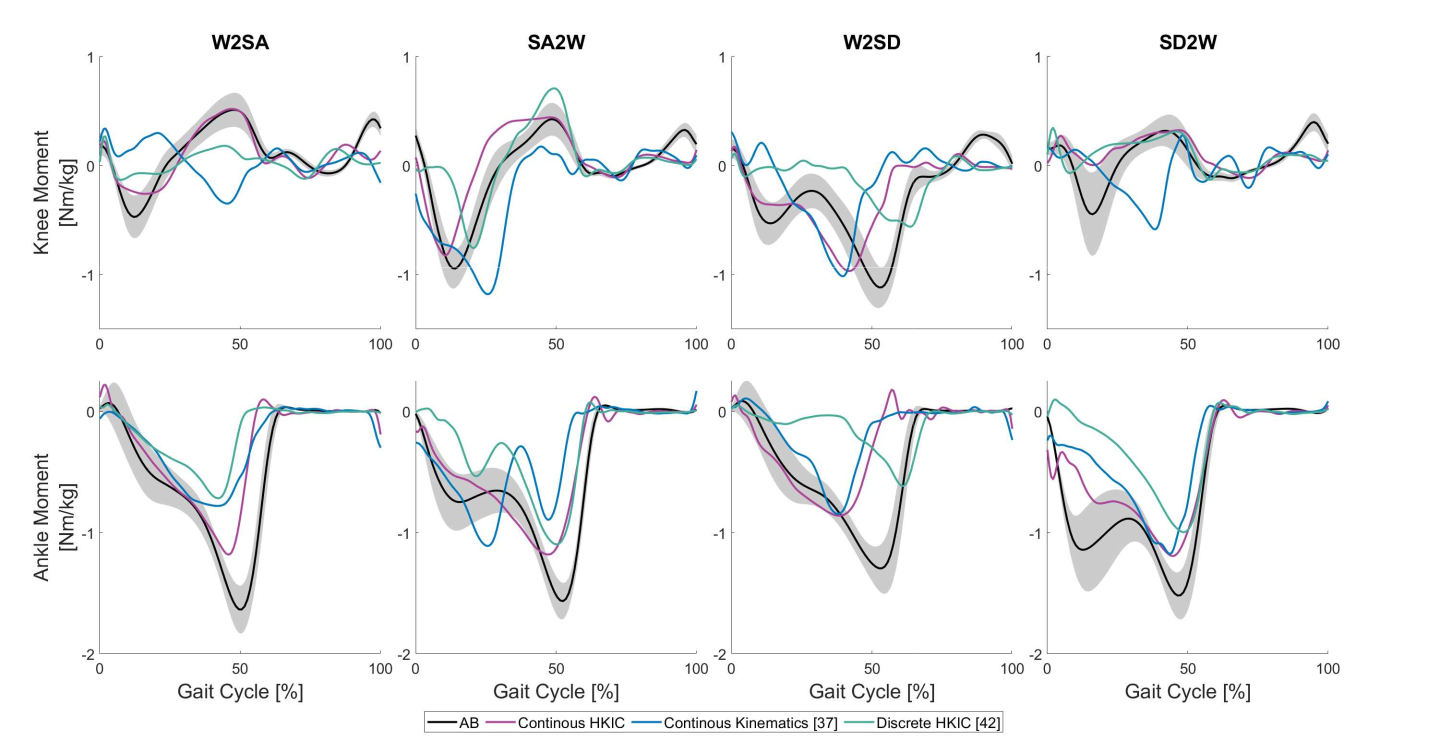
Transitioning swing kinematics alone leaves stance-phase impedance switching abrupt during walk–stair transitions.
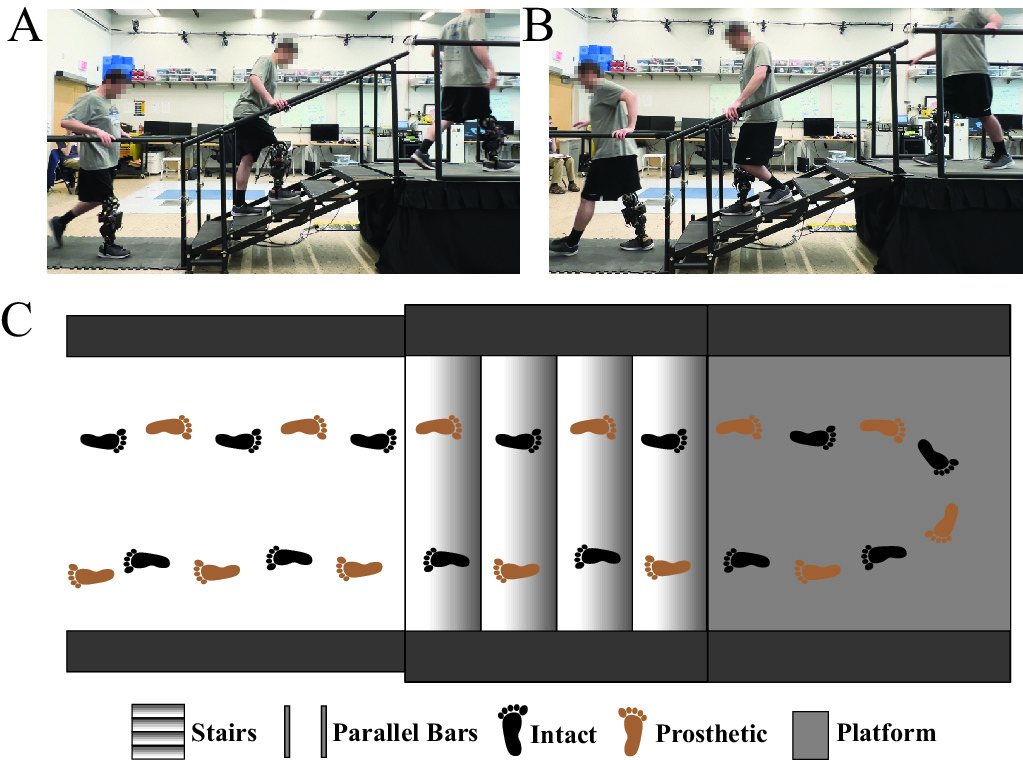
Stance-phase support adaptation during walk–stair transitions in a powered prosthesis.
Ph.D. research conducted in the LocoLab at the University of Michigan, advised by Prof. Robert D. Gregg.