All Projects

Industry + Research
The Arc

From human locomotion models to deployed wearable robots

My projects follow one technical arc: understand human locomotion, turn that understanding into real-time control, and validate it in systems people can actually use. The work spans robotic footwear and powered prostheses, but the core problem is consistent: wearable robots need to sense human movement, infer intent, adapt assistance, and stay reliable outside ideal lab conditions.

  1. 01 Modeling
  2. 02 Control
  3. 03 Intent
  4. 04 Safety
  5. 05 Personalization
  6. 06 Deployment

Product Locomotion Systems

Real-time wearable-robot control translated into deployed products.

Industry

ShiftOS: Real-Time Control for Moonwalkers Robotic Footwear

Product-level gait sensing, terrain response, adaptive braking, and embedded locomotion control.

  • Gait sensing, adaptive braking, and terrain-aware responses shipped into real user workflows.
  • Low-latency transitions, runtime fallback logic, and safety constraints hardened for deployment.
Real-Time Control Robotic Footwear Gait Detection Terrain Response
Continuous Locomotion Control

Modeling and controlling transitions between walking, stairs, ramps, and standing.

Research

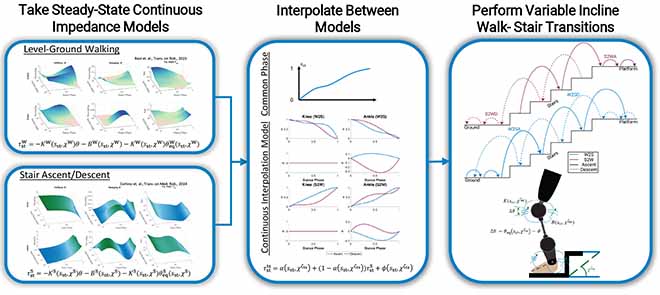
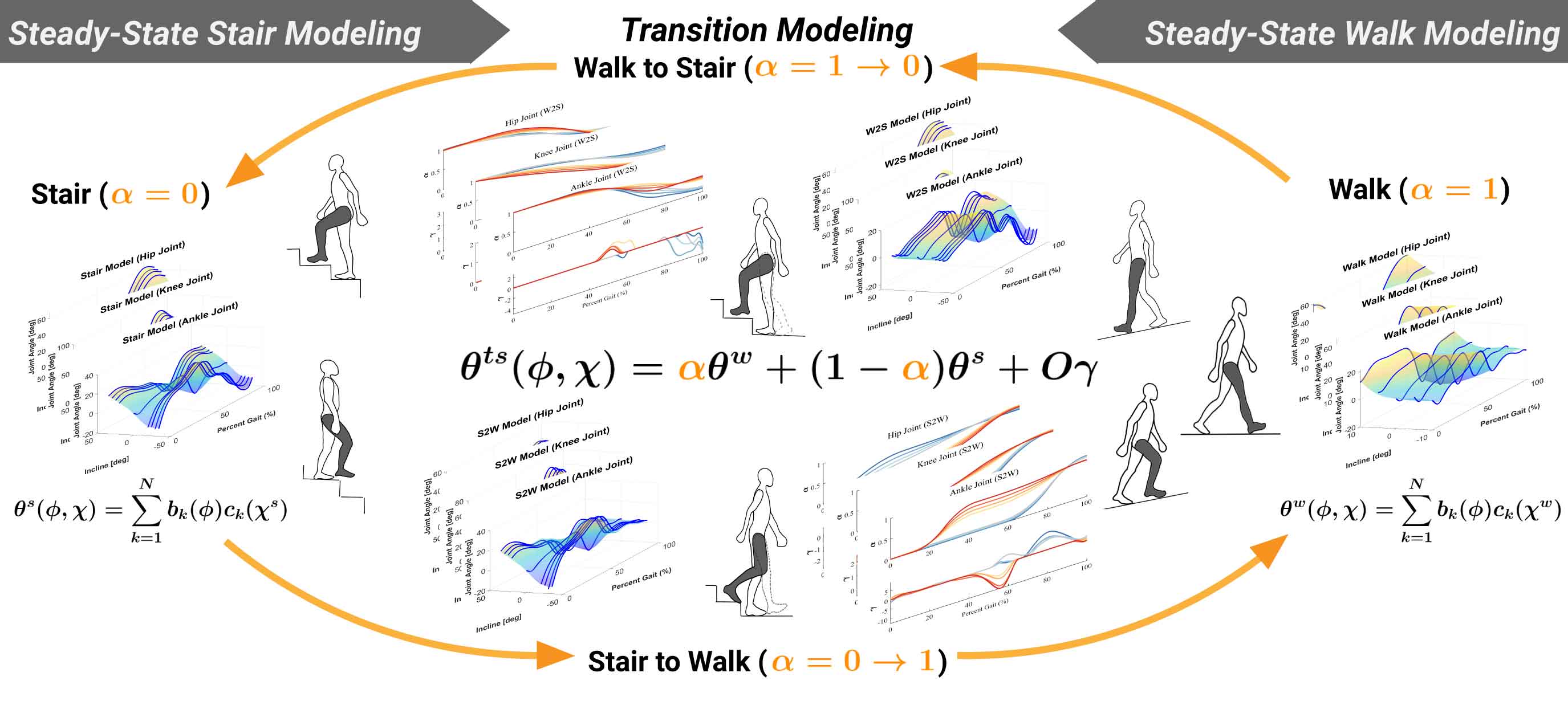
Transitional Kinematics for Continuous Locomotion Control

IEEE TMRB 2022

A convex-combination movement model connecting walking, stair climbing, and walk–stair transitions.

  • Gait modeled as a convex combination of steady-state behaviors
  • Smooth activity transitions without discrete mode switching
Kinematic modeling Transitions Biomechanics
Research

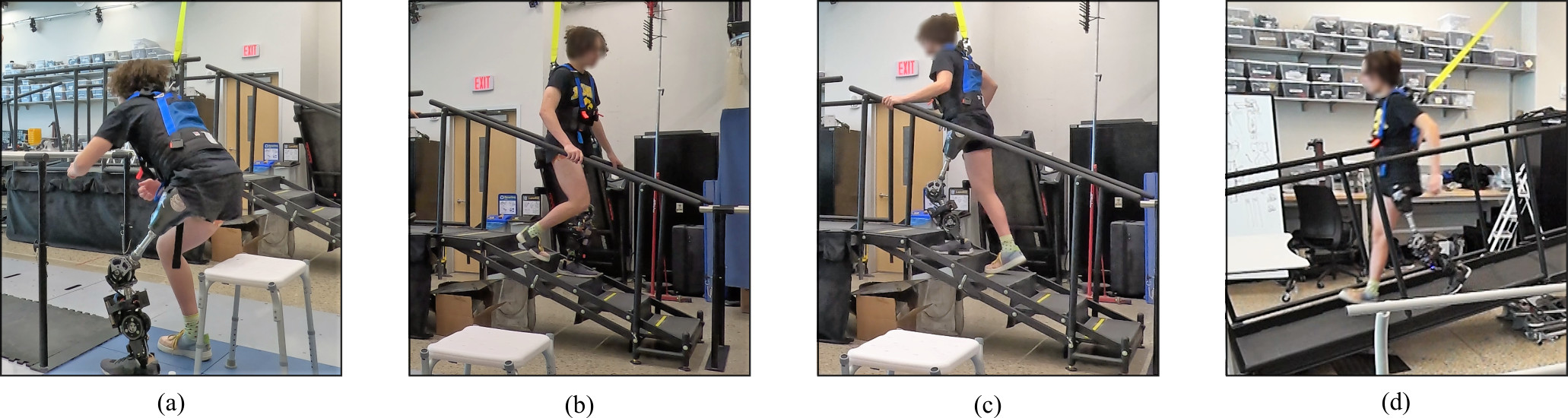
Phase-Variable Control for Continuous Locomotion Transitions

IEEE TNSRE 2024 · IROS 2023 Best Student Paper Award

Smooth walk–stair transition control demonstrated on a powered knee-ankle prosthesis across inter-leg cases.

  • Phase-aligned reference generation
  • Robust across inter-leg transition cases
Phase-variable control Stairs Human trials
Research

Continuous Impedance Control for Wearable Locomotion

IEEE TNSRE 2026

Stance-phase support adaptation during walk–stair transitions in a powered prosthesis.

  • Stance-phase impedance blended continuously across the stride
  • Validated on a powered knee-ankle prosthesis with human subjects
Impedance control Phase variable Walk–stair
Research

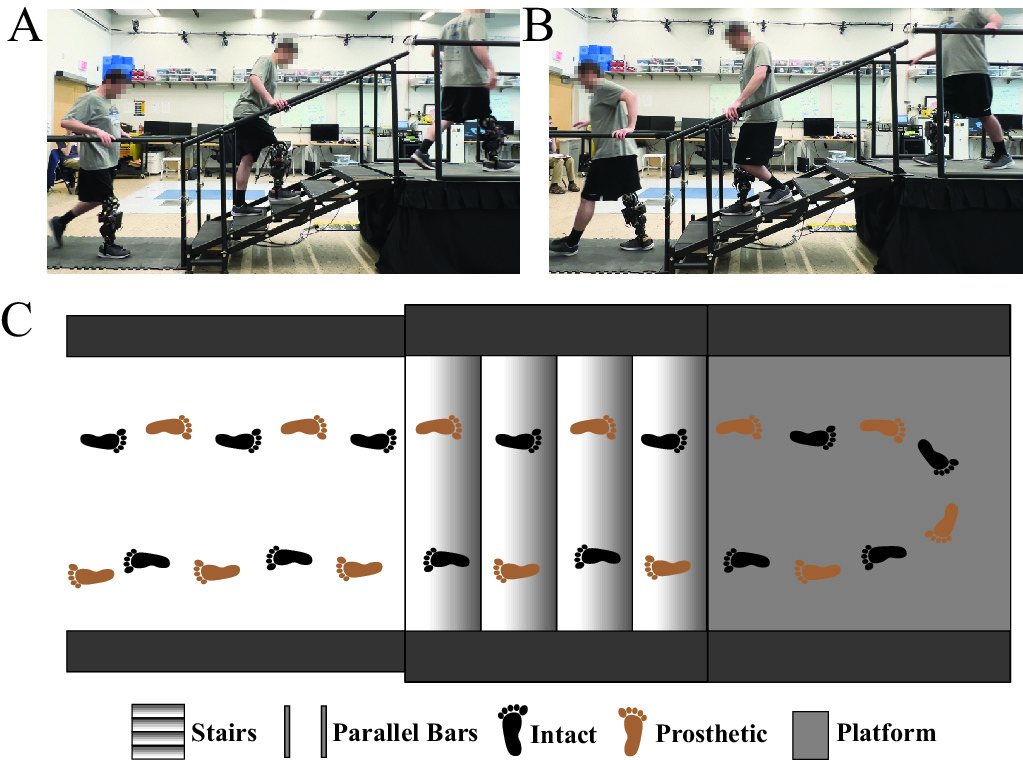
Powered Prosthesis Endurance Across Daily Activity Circuits

IEEE IROS 2023

An endurance-focused evaluation across repeated sitting, standing, walking, ramps, and stairs.

  • Unified mid-level control across sit, walk, ramps, and stairs
  • More than twice as many total laps in a single-participant case study
Endurance Mid-level control Human trials

Intent, Safety & Adaptation

Recognizing user intent, adapting assistance, and preventing unsafe robot behavior.

Research

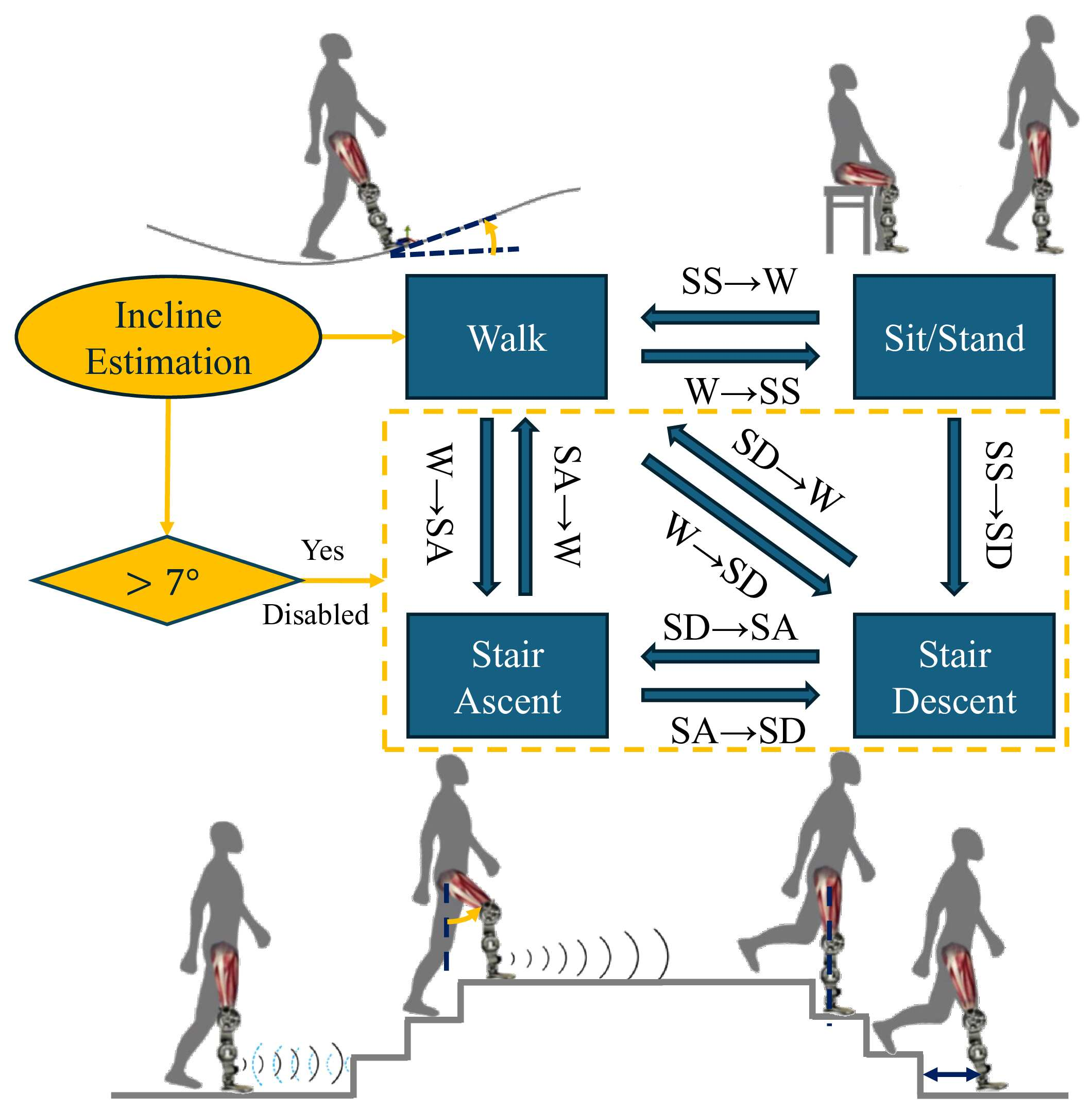
Interpretable Intent Recognition for Wearable Robots

IEEE T-RO 2025

ICF-based real-time activity recognition using biomechanically meaningful motion features.

  • Biomechanically interpretable features — no black-box embeddings
  • Real-time classifier (<5 ms), ambilateral gait estimation
Intent recognition ICF Real-time ML
Research

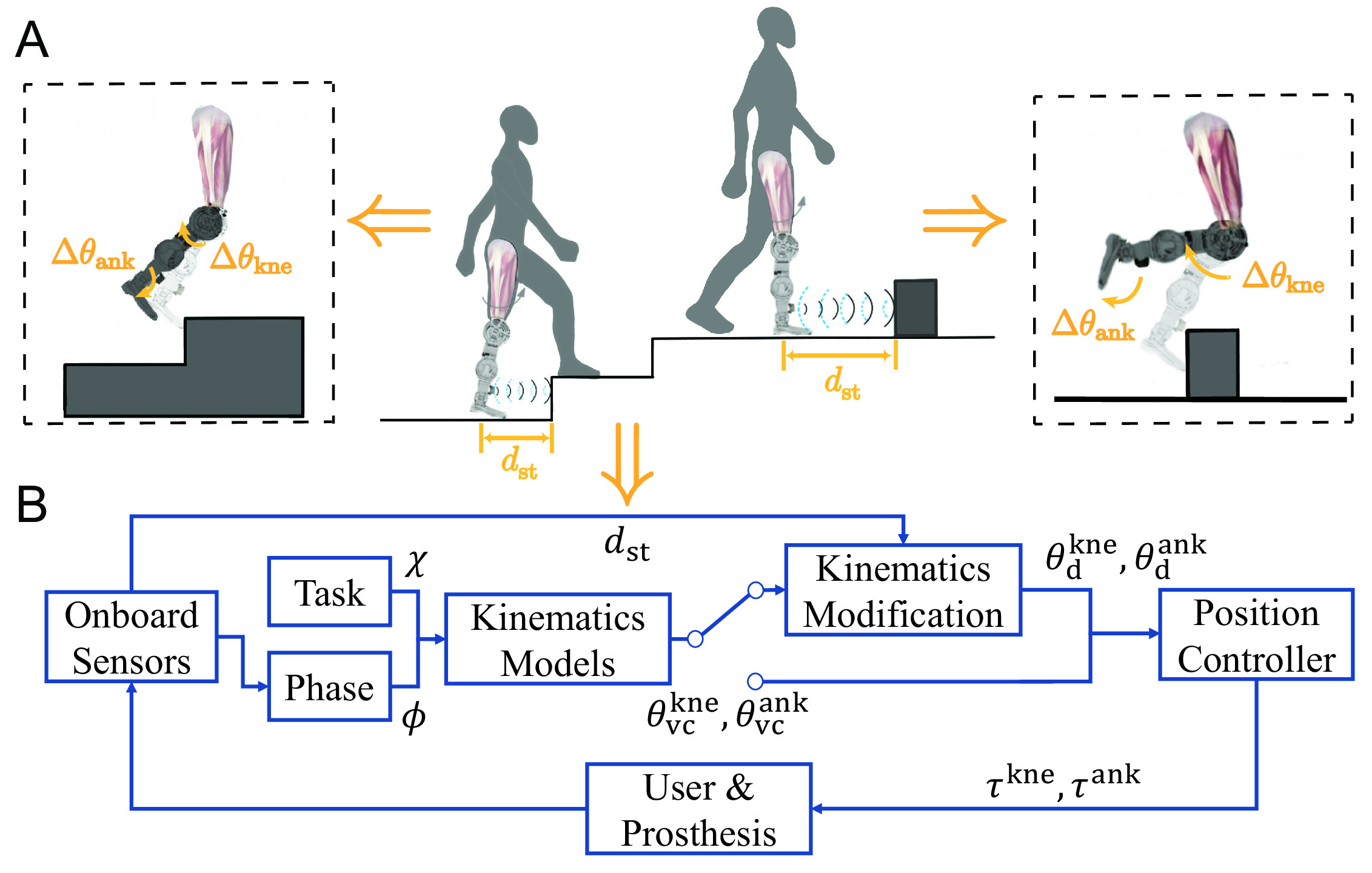
Environment-Aware Safety Reflexes for Wearable Robots

IEEE TBME 2024 · Featured Article

Real-time toe-stub prediction and swing-trajectory adaptation over stairs and obstacles.

  • Safety intervention compatible with continuous control
  • Multi-sensor inputs (kinematics + ranging)
Safety Toe-stub avoidance Safety-aware control
Research

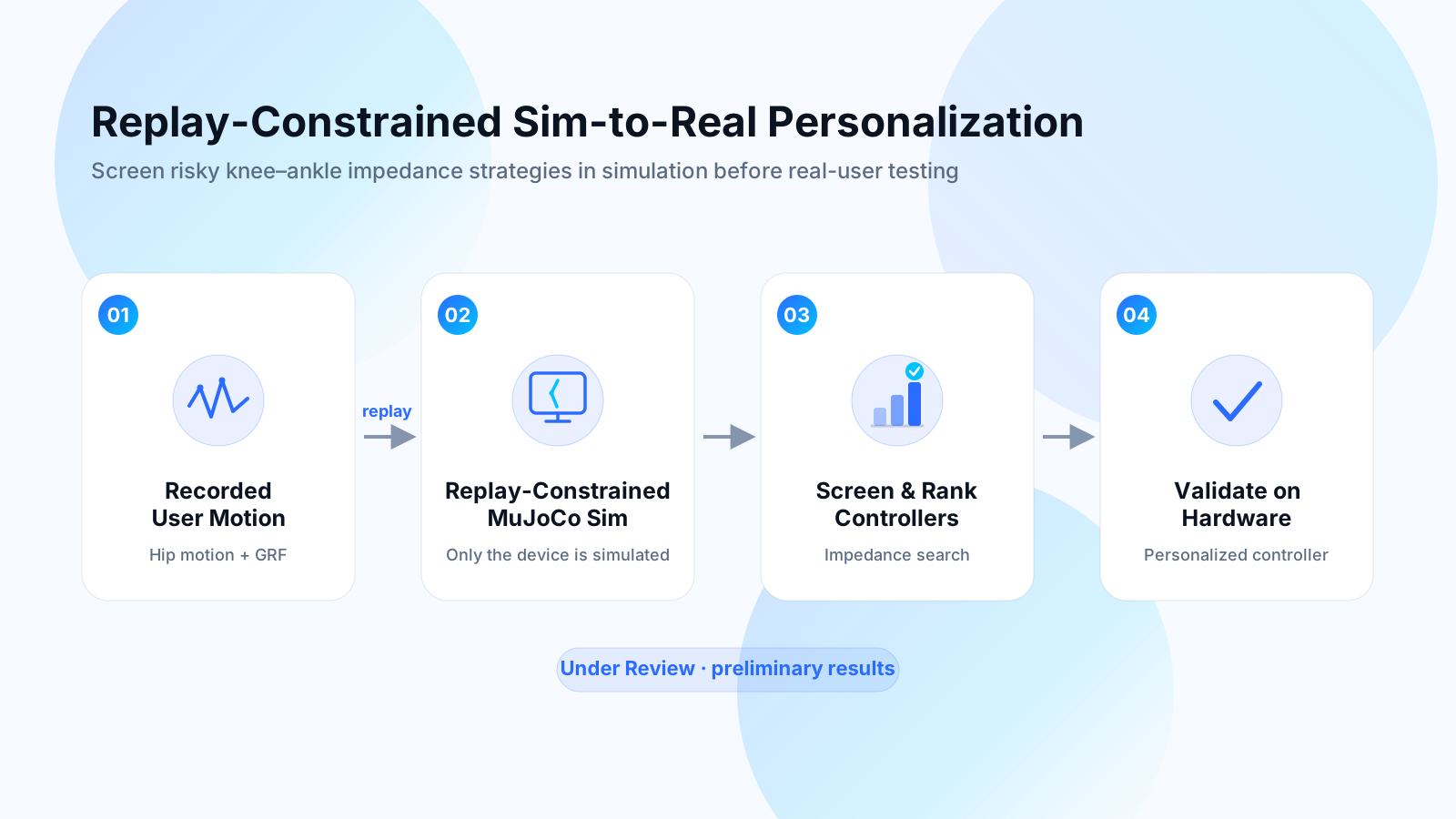
Safer Personalization of Prosthesis Controllers Through Replay-Constrained Simulation

Under Review

A replay-constrained MuJoCo framework that ranks personalized knee–ankle impedance controllers in simulation before real-user testing.

  • Preliminary: best hardware controller fell within the top simulation-ranked candidates
  • 42–59% biomimicry-reward gain over the unpersonalized baseline (preliminary, submitted study)
Replay-constrained sim MuJoCo Impedance personalization
Research

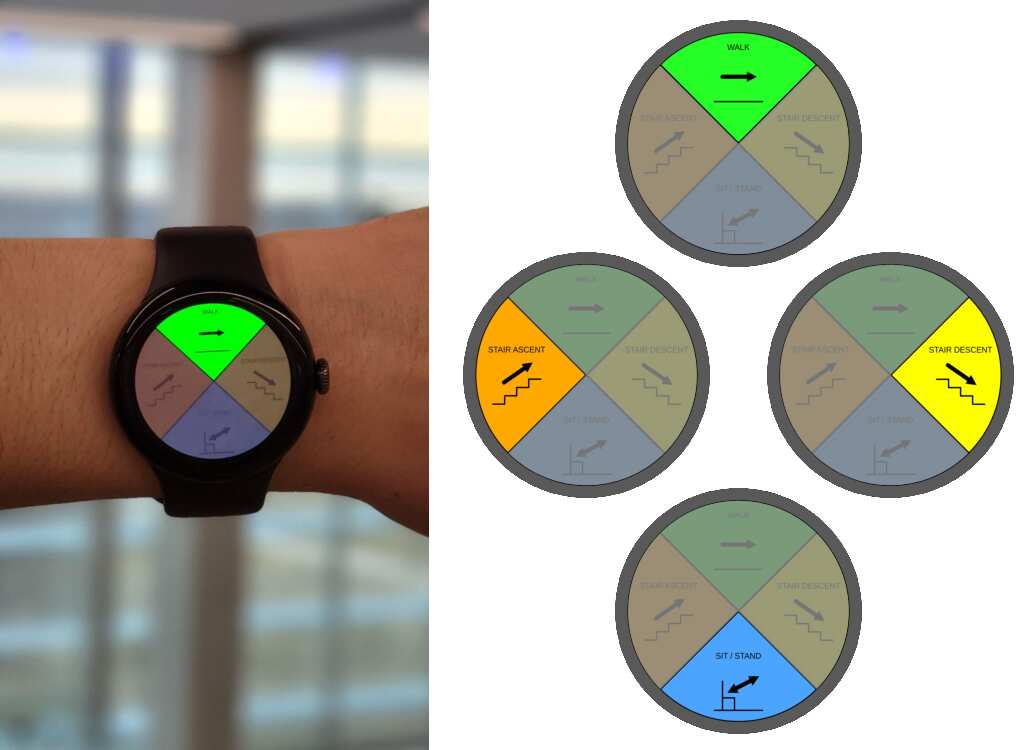
Shared-Control Interfaces for Wearable Robots

IEEE EMBC 2025

Smartwatch gesture and haptic feedback for user-commanded locomotion mode transitions.

  • Swipe gestures mapped to four locomotion modes
  • Vibrotactile + visual confirmation, TCP comms to prosthesis
Shared control Human-robot interaction Vibrotactile feedback

Patent Applications and Filings

Filed and pending IP across wearable-robot control, robotic footwear, powered prosthesis safety, activity classification, and user interfaces.
4 Patent applications and filings

Filed and pending IP across wearable-robot systems.

Robotic Footwear Control and deployment
Prosthesis Safety Obstacle avoidance
Activity Recognition Intent classification
Wearable Interfaces User interaction
View full patent application list
  • Control Method for Mobility Device, Electronic Device, and Storage Medium. Shihao Cheng, Xunjie Zhang. China Patent Application Publication CN121704448A, 2026. Pending.
  • Powered Lower Limb Assistive Device with Obstacle Avoidance. Robert D. Gregg, Shihao Cheng, Curt A. Laubscher. International Patent Application Publication WO2025111601A1, 2025.
  • Powered Prosthesis and Activity Classifier. Robert D. Gregg, Shihao Cheng, Curt A. Laubscher. U.S. Provisional Patent Application 63/715,397 / International Patent Application PCT/US2025/053837, 2024–2025.
  • Limb-Assistive Device and System with User-Wearable Interface. Robert D. Gregg, Amy E. Lang, Curt A. Laubscher, Shihao Cheng. U.S. Provisional Patent Application 63/839,889, 2025.